
The surface quality of the die-cast medals is generally judged based on the smoothness of the medals, the clarity of the details, the absence of scratches, and the absence of bubbles. These qualities determine the perceived value and aesthetic appeal of the medals. These qualities are influenced by the key factors throughout the entire die-casting process (from design to post-processing). Here is a detailed breakdown of the most important factors:
Poorly optimized designs are a primary cause of surface defects, as they force the die-casting process to compensate for unworkable features. Key design-related factors include:
Medal Thickness :Uneven wall thickness (e.g., a 1mm edge adjacent to a 6mm logo) causes uneven cooling. Thicker sections shrink more as they solidify, creating surface sink marks (depressions) or "pits"; thinner sections may cool too quickly, leading to cold shuts (visible lines where molten metal streams fail to merge smoothly). For medals, a consistent thickness of 2–4mm is ideal to avoid these issues.
Draft Angles & Sharp Corners: Without sufficient draft angles (1–3° for most medal surfaces), the solidified metal blank sticks to the mold, resulting in surface scratches or "tears" when demolded. Sharp 90° corners trap air during casting, forming air bubbles (small, round indentations) on the surface; rounding corners to 0.5–1mm eliminates this problem.
Detail Size & Complexity: Ultra-fine details (e.g., text smaller than 8pt, thin relief lines <0.3mm) cannot be fully filled by molten metal, leading to blurry or missing surface features. Overly complex 3D reliefs (e.g., deep recesses or narrow gaps) also trap air, creating voids that mar the surface.
The mold is the "template" for the medal’s surface—any flaw in the mold will be mirrored on the final product.
Mold Surface Polishing: A poorly polished mold leaves surface roughness (grainy or uneven texture) on the medal; a highly polished mold produces a smooth, reflective base for plating or enamel.
Venting System Efficiency: Insufficient or blocked mold vents trap air during metal injection, leading to surface bubbles (visible as small, hollow spots) or "porosity" (microscopic holes that appear dull).
The mold is the "template" for the medal’s surface—any flaw in the mold will be mirrored on the final product.
Molten Metal Temperature: If the temperature is too low, the mold will not be filled properly. If the temperature is too high, it will cause oxidation and produce waste residue, both of which will affect the quality of the medal.
Injection Pressure & Speed: Low pressure/speed prevents the metal liquid from filling the precise areas of the mold, resulting in blurred product surfaces or incomplete relief details.; High pressure/speed ,it will cause air to be trapped and form bubbles, or the metal will splash onto the mold, resulting in irregular raised areas on the surface, Precise control is necessary to ensure quality.
Cooling Time: Too short: Metal solidifies unevenly, creating surface warping (e.g., a curved medal edge) or internal stress that later causes surface cracks;Too long: Metal overcools in the mold, sticking to the surface and leaving scratches when demolded.
Release Agent Application: Excessive release agent, Leaves a sticky, oily residue on the medal surface, which prevents plating/enamel from adhering (causing peeling or discoloration later); Insufficient release agent: Causes the blank to stick to the mold, leading to surface tears or "gouges."
Selecting high-purity alloys with appropriate compositions is the foundation for ensuring the smooth and shiny surface of the medals. The presence of impurities and incorrect material selection will directly cause permanent appearance defects.
Post-casting steps (trimming, polishing, cleaning) are critical to enhancing surface quality
Deburring & Trimming: Over-trimming cuts into the medal’s surface, creating rounded edges or "nicks" in relief details. Under-trimming leaves thin metal burrs that feels rough to the touch.
Polishing Technique: Over-polishing Wears down fine details (e.g., making text unreadable) or creates some areas glossy, others dull
Using the wrong polish: Coarse compounds (e.g., sandpaper <300 grit) leave scratch marks; low-quality rouge causes streaks on plated surfaces.
Cleaning Before Coating: If the polishing residue or oil stains are not thoroughly removed, it will cause the electroplated layer to peel off or bubbles to form on the enamel, seriously affecting the adhesion.
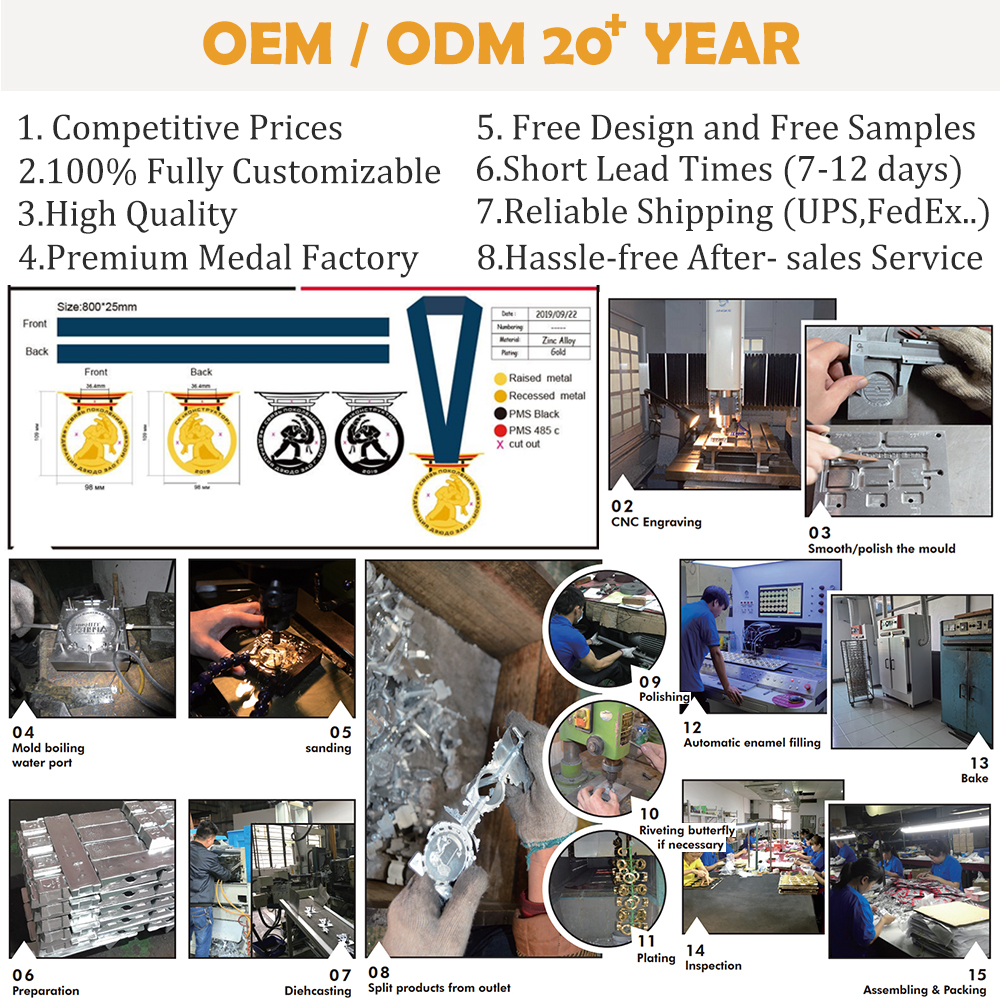
Send your logo, design, or sketch idea.
Specify the size and quantity of the metal medals.
We will send a quote based on the provided information.
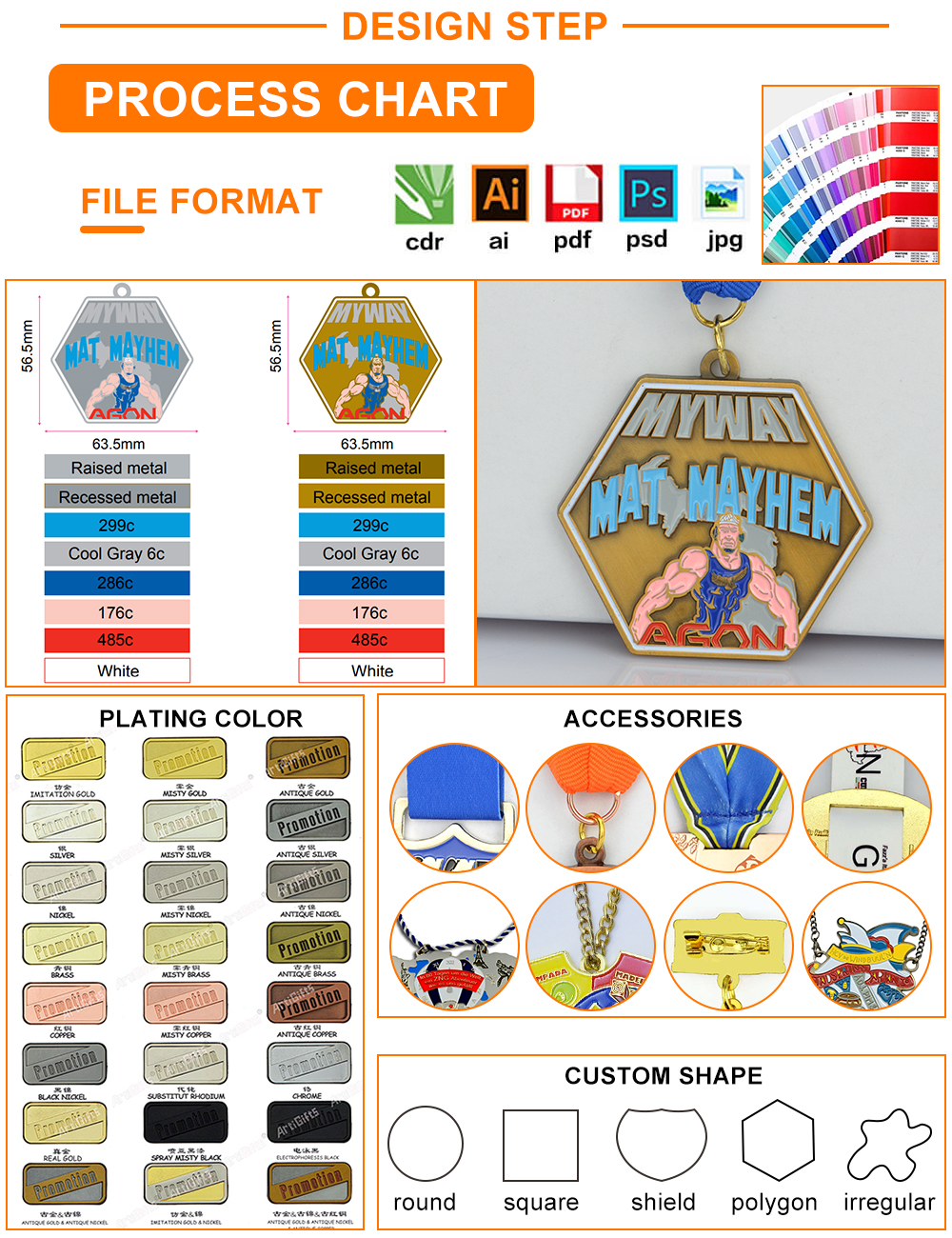
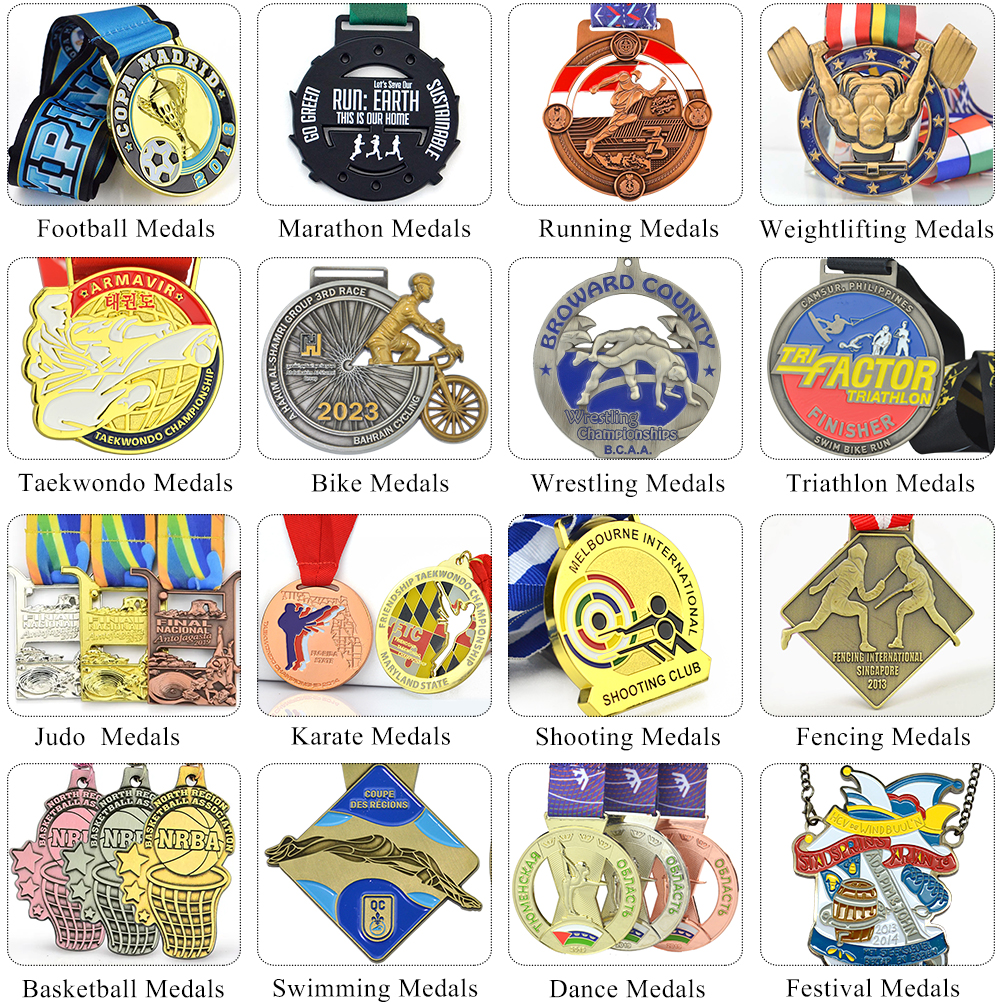
The medal styles you might like
To reduce the price of your medals, you might consider the following:
1. Increase the quantity
2. Decrease the thickness
3. Decrease the size
4. Request a standard neckband in a standard color
5. Eliminate colors
6. Have your art completed "in-house" if possible to avoid art charges
7. Change plating from "bright" to "antique"
8. Change from 3D design to 2D design
Best regards | SUKI
ArtiGifts Premium Co., Ltd. (Online factory/office: http://to.artigifts.net/onlinefactory/)
Factory Audited by Disney: FAC-065120/ Sedex ZC: 296742232/ Walmart: 36226542 / BSCI: DBID:396595, Audit ID: 170096 / Coca cola: Facility Number: 10941
(All brand products are required an authorizes to produce)
Direct: (86)760-2810 1397| FAX: (86) 760 2810 1373
TEL: (86)0760 28101376; HK office Tel: +852-53861624
Email: query@artimedal.com WhatsApp: +86 15917237655 Phone Number: +86 15917237655
Website: https://www.artigiftsmedals.com | Alibaba: http://cnmedal.en.alibaba.com
Complain email: query@artimedal.com After-service Tel: +86 159 1723 7655 (Suki)
Warning: Pls double check with us if you got any email about bank information changed.
Post time: Oct-18-2025